
Stop Water From Sitting Where It Shouldn't
Drainage solutions for residential and commercial properties in Charleston
Standing water in your yard in Charleston does more than create muddy patches and mosquito breeding grounds. It softens soil around foundations, drowns grass and plants, and undermines driveways, walkways, and patios by washing out the base material underneath. If water pools near your home or business after every rainstorm, you need drainage work that redirects runoff and keeps it moving toward an appropriate outlet. Southeastern Landscape Concepts installs drainage systems designed for the soil, topography, and rainfall patterns that define the Lowcountry.
Each drainage project begins with an evaluation of where water collects, where it comes from, and where it needs to go. Solutions may include French drains to intercept water before it reaches problem areas, surface drains to capture runoff from hardscapes, or regrading to change the slope of your yard. The system is installed with proper pitch and outlet points to ensure water flows away from structures and landscaping. In Charleston, clay soil and flat terrain often require strategic planning to move water efficiently without creating new issues elsewhere on the property.
If you are dealing with standing water or runoff problems in Charleston, get in touch to schedule a drainage evaluation and discuss solutions that will work for your property.
What Gets Installed and How It Changes the Yard
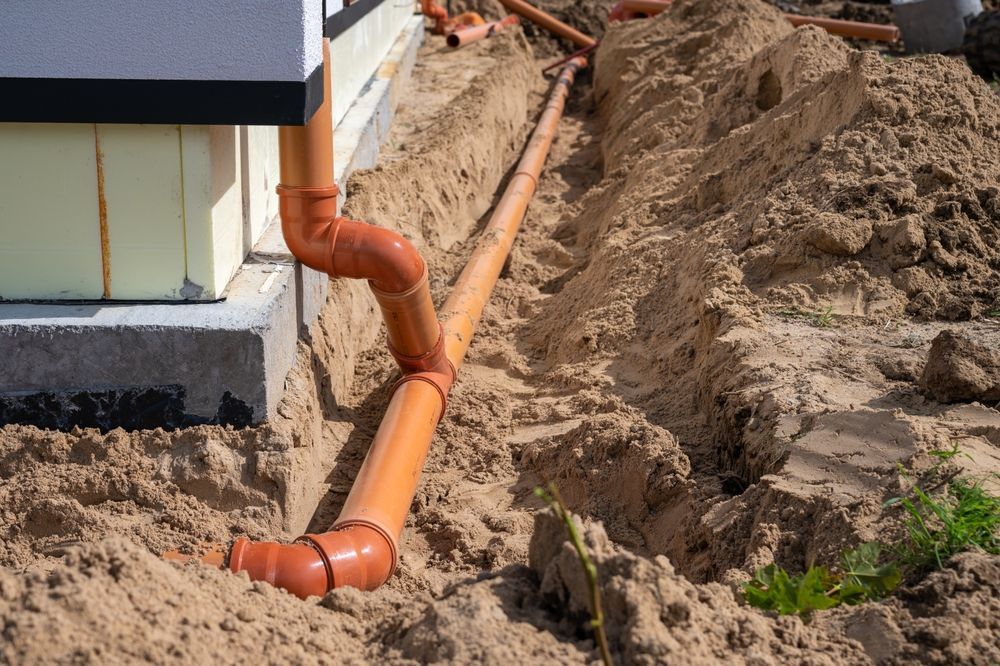
Drainage installation involves digging trenches to the proper depth and grade, laying perforated pipe wrapped in filter fabric, and backfilling with gravel to allow water to flow into the system. In Charleston, the crew checks the slope of the yard and marks the path water will take from the source to the outlet, which may be a drainage ditch, storm sewer, or natural low point on the property. Surface drains are placed in hardscaped areas such as driveways or patios, and they connect to underground pipe that carries water away.
Once the system is in place, you will notice that water no longer sits in low spots after storms, grass and plants stop drowning in saturated soil, and mud does not track across walkways or into the house. The yard dries out faster, and the soil around your foundation stays firm instead of turning into a soft, unstable mess. Hardscapes remain level because the base is no longer washing out, and you no longer need to avoid sections of the yard for days after it rains.
The drainage system works silently and out of sight, and it requires no ongoing maintenance beyond occasional checks to ensure outlets remain clear. The work is coordinated with grading and hardscape installations to create a property-wide water management plan that prevents problems before they start.
People in Charleston want to know how drainage systems handle heavy rain, whether the installation will disrupt their yard, and what happens if water has nowhere to go. Southeastern Landscape Concepts answers these questions based on experience working with Lowcountry drainage challenges.
Here is what property owners usually ask
Yes, the system is sized and installed to handle typical rainfall in Charleston, including heavy downpours. Pipe diameter and trench depth are chosen based on the volume of water the system needs to move.
If water is pooling on your property in Charleston and causing ongoing problems, Southeastern Landscape Concepts can evaluate the situation and recommend a drainage solution that fits your budget and your site. Reach out to schedule a consultation and discuss what the project will involve.